Trust: The Genetic Code Of Organisational DNA

The New Workplace Contract
The workplace as we know it has changed. The old regime was relatively simple: employees gave organisations their time, skills, and commitment, and organisations offered stability, opportunity, and a path forward. Today, that construct is being rewritten.
Multiple factors have made this so. AI is changing the nature of jobs and redefining skills, while economic uncertainty is testing how organisations lead, communicate, and make difficult decisions. At the same time, employees are asking harder questions about purpose, fairness, growth, privacy, flexibility, and the future of their careers.
And underpinning these questions is one pivotal, invisible pillar: trust.
The numbers tell an interesting story. According to Gallup's 2026 State of the Global Workplace, only 23% of Indian employees were engaged at work in 2025, while 59% were classified as not engaged. India may still outperform the global engagement average of 20%, but the direction of travel is a warning shot.
At the same time, 61% of Indian professionals surveyed by Michael Page reported high or complete trust in business leadership, ahead of the APAC and global averages. And so, the message is clear: trust exists, but it cannot be taken for granted. Because a workplace can be preferred and even admired. But can it be trusted? Therein lies the question.
Why Trust, Why Now?
For years, organisations have competed to become employers of choice. They have invested in better offices, compelling benefits, flexible policies, employee wellness, learning platforms, inclusion programmes, and carefully crafted employer brands.
Because clearly, these things matter. But they do not necessarily answer the harder question: How does the workplace fare during testing times? Do they believe promotions and rewards are genuinely fair? Do employees trust leadership when the news is bad? Can they disagree with the boss without damaging their careers? Can they admit failure without fear? Questions such as these abound.
The rise of AI makes these questions even more consequential. EY's 2025 Work Reimagined findings show that nearly nine in 10 employees in India now use AI at work, while employees remain more cautious than employers about transparency, explainability, and data confidentiality.
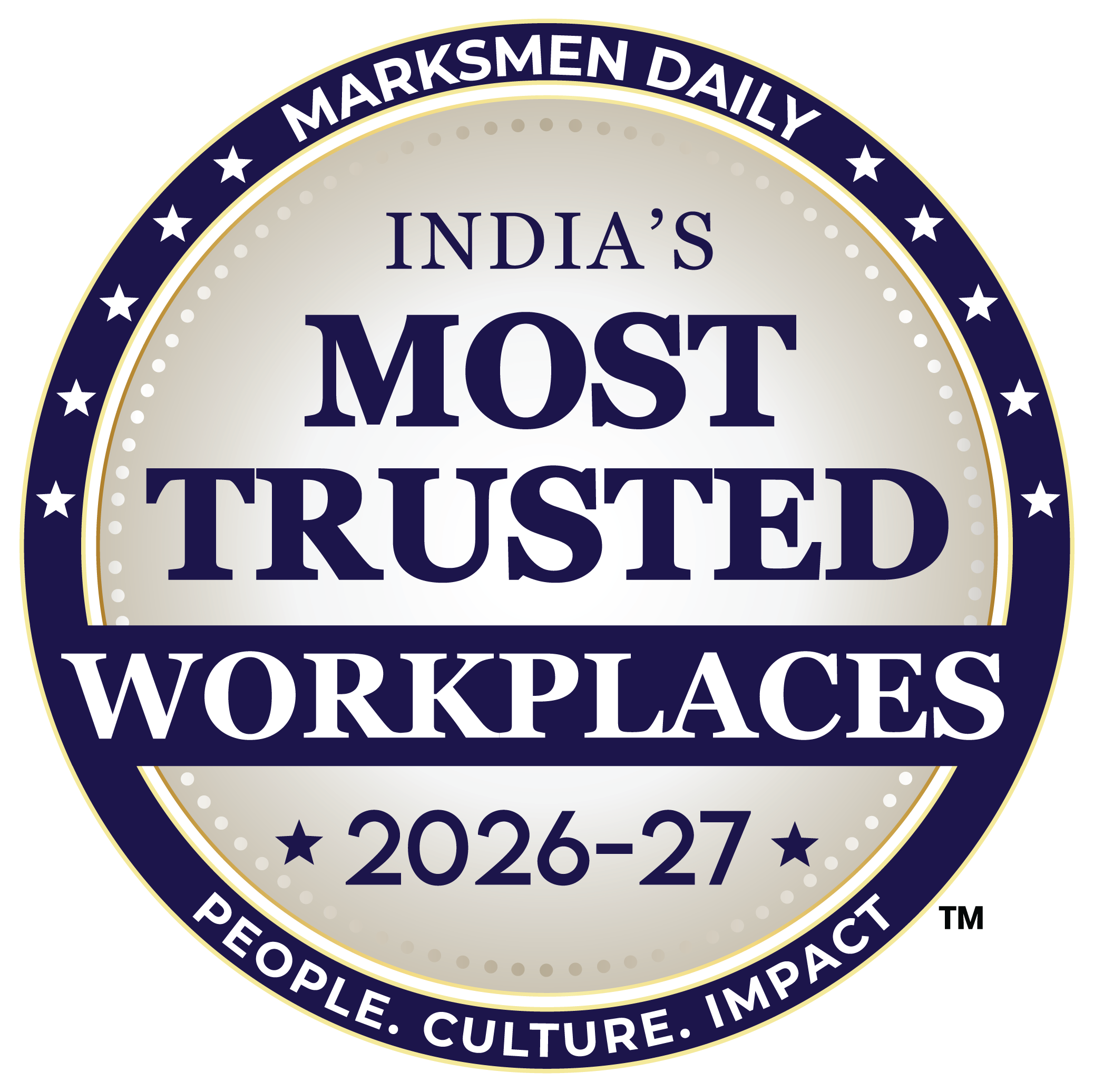
This is the Trust Gap in action: the distance between what an organisation promises and what its people actually experience. India's Most Trusted Workplaces exists to identify the organisations that are closing that gap, and are demonstrably proving that they are doing so, and not merely talking about trust.
Measuring What Matters
In conjunction with our research partners LeadCap Ventures, India's Most Trusted Workplaces goes beyond the conventional workplace satisfaction survey, and examines trust as a two-way relationship.
That's because a genuinely trusted workplace is not about blind trust. Instead, it is one where employees trust their organisation, and organisations can trust their people to act with integrity, accountability, and ownership.
The research will therefore examine the dual facets of the workplace relationship. On the one hand, employee trust, and understanding if people believe their organisation is honest, fair, reliable, humane, and accountable. And on the other hand, organisational trust, or whether the organisation can rely on its people to act responsibly, speak honestly, protect its interests, challenge constructively, and do the right thing when nobody is watching.
Research was conducted
across six core dimensions:

Truth
Communication | Consistency | Integrity | Transparency

Fairness
Equity | Meritocracy | Standards | Change

Safety
Psychological Safety | Speak-Up Culture | Freedom to Fail | Resilience

Humanity
Respect | Empathy | Care | Dignity

Accountability
Leadership Ownership | Equal Standards | Responsibility | Integrity

Reciprocity
Mutual Commitment | Trust Under Pressure | Shared Responsibility | Future Confidence
From Recognition to Reckoning
India's Most Trusted Workplaces is a one-of-a-kind gathering of the people responsible for creating, protecting, and transforming organisational culture: CEOs, CHROs, business leaders, people leaders, founders, and senior decision-makers.
The conversation will move beyond the familiar vocabulary of employee engagement and employer branding to examine the harder questions facing organisations today. Such as how to build trust in a changing talent landscape. Or what a trusted workplace looks like when performance pressure rises. And perhaps most critically, what happens to trust when either employer or employee gets it wrong.
The event will bring together research, leadership perspectives, real-world experiences, and the organisations that are setting new benchmarks for workplace trust. Ultimately, this unique platform will recognise those who have earned the distinction of being among India's Most Trusted Workplaces. Because recognition is the final chapter; the crux of the story is how trust was earned in the first place, and India's Most Trusted Workplaces is where that tale is told.
Key Highlights

India's Most Trusted
Workplaces Research
India's Most Trusted Workplaces Research A research-led assessment of workplace trust across six critical dimensions.

The Trust Gap
What organisations promise vs. what employees actually experience.

6 Dimensions of Trust
Truth | Fairness | Safety | Humanity | Accountability | Reciprocity

Leadership Conversations
Unfiltered perspectives from CEOs, CHROs, founders and business leaders.

AI × Workplace Trust
Exploring trust, transparency, privacy and the human impact of AI.

Trust Beyond Employer Branding
Moving the conversation from workplace perception to workplace reality.

Recognition of India's Most Trusted Workplaces
Celebrating organisations that have earned trust—not just claimed it.
Who can Participate?

IT & ITES

BFSI

Healthcare

Manufacturing

Automotive

FMCG

Retail & E-commerce

Technology

Telecom

Real Estate

Infrastructure

Logistics

Education

Hospitality

Energy

Media & Entertainment

Professional Services

Start-ups

Fintech

Public Sector
Partners
Presented By

Telecast partner
Magazine partner

Media partners


Research partner

Brought To You By